| Reimagine Landfills · The Reuse Report #1 |
 |
What to do with your town's trash
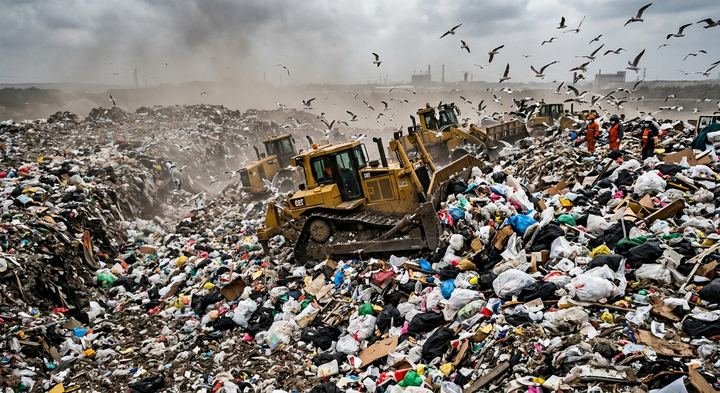
In 2018 the US landfilled about 146 million tons of municipal waste. Food was about 24% of it, plastics over 18%, paper about 12%. Most of it already has a better job. Here is what to do with each material, the official specs that already allow it, and places already doing it. [U.S. EPA]
Read it on the web
|
1 · Organics
Food scraps & yard waste
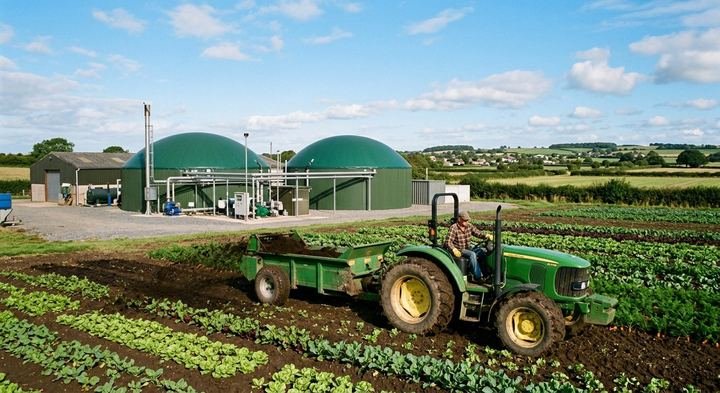
Do this: Digest them for biogas and fertilizer, or compost them. Never bury them.
Official specs & guidance
Where it's already done - Oakland, California: EBMUD digests sewage with food scraps and grease. In 2012 it became the first wastewater plant in North America to make more renewable energy onsite than it uses. [EBMUD, Recycling water and energy]
- San Francisco: its 2009 Mandatory Recycling and Composting Ordinance made it the first California city to require composting, including food scraps. [SF Environment Department]
|
|
2 · Glass
Glass
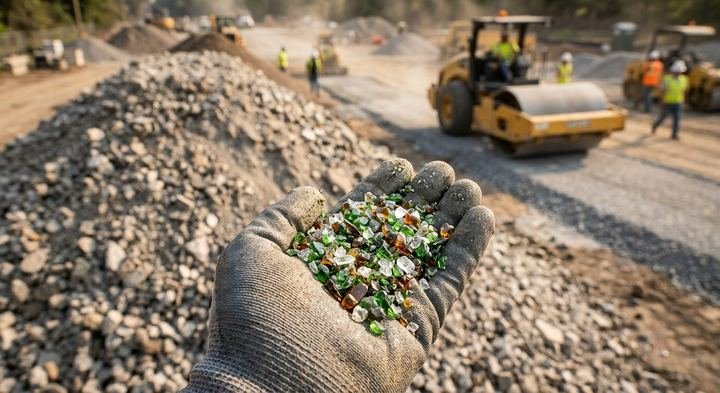
Do this: Crush glass that won't go back into bottles into cullet, and use it as sand-and-gravel aggregate for fill, drainage, pipe bedding and road base.
Official specs & guidance - FHWA: properly sized crushed glass behaves like gravel or sand and should be suitable for road base or fill; it has also been used as an aggregate substitute in asphalt paving. [FHWA-RD-97-148, Waste Glass]
- Texas DOT specs: up to 100% cullet for utility bedding and pipe underdrains; up to 20% in embankments and flexible base; up to 5% in asphalt-stabilized base. [TxDOT, Use of Glass Cullet in Roadway Construction]
- New York State DOT (§733-05 Glass Backfill): up to 30% glass by weight in subbase, embankment and select fills, and as underdrain filter material. [NYSDOT, Recycled Materials (733-19)]
Where it's already done Asphalt is the weakest use for glass: TxDOT calls it less attractive because of stripping in wet conditions, and PennDOT warns of performance problems in hot mix asphalt. Bedding, backfill and base are the proven routes.
|
|
3 · Tires
Tires
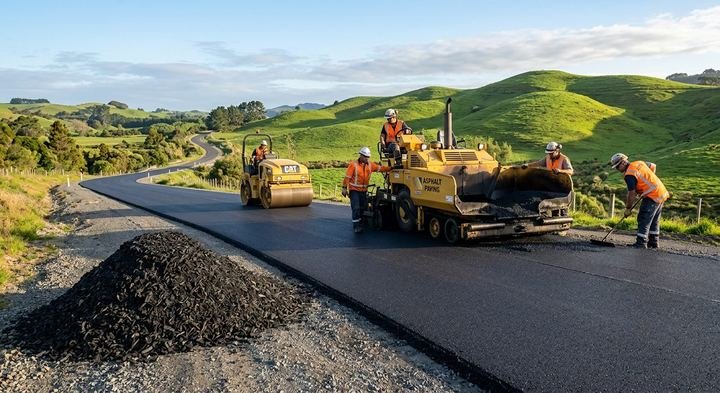
Do this: Grind scrap tires into crumb rubber and use it in rubberized asphalt or rubberized chip seal.
Official specs & guidance - FHWA encourages waste tire rubber in asphalt paving where it is cost effective and properly engineered, and publishes technical guides for it. [FHWA, Ground Tire Rubber]
- CalRecycle: rubberized asphalt concrete is specified in the Caltrans Standard Specifications and the Greenbook public works specs. [CalRecycle, Rubberized Asphalt Concrete]
Where it's already done
|
| |
4 · Concrete & rubble
Concrete & rubble
Do this: Crush and screen demolition concrete into recycled concrete aggregate (RCA) for road base, instead of quarrying new rock.
Official specs & guidance
Where it's already done
|
|
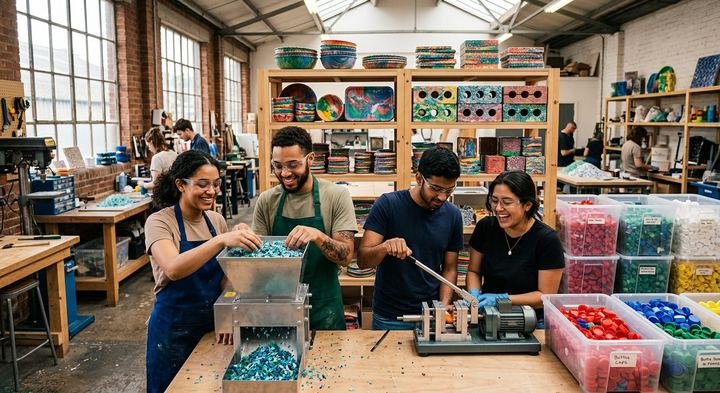
5 · Plastics
Plastics
Do this: Open a small workshop with free, open-source Precious Plastic machines and turn local plastic into local products.
Official specs & guidance
Where it's already done - Worldwide: Precious Plastic reports about 1,100 workspaces in 56 countries (its 2024 impact data). [Precious Plastic]
- The Philippines: Precious Plastic Philippines makes construction materials and has helped start more than 20 other workshops. [Precious Plastic]
|
|
Paper, metals and e-waste- Paper & cardboard: Keep it clean and in recycling; shredded plain paper and cardboard can also go in compost as "browns". Paper was the largest part of US trash in 2018; 68.2% was recycled, and corrugated boxes 96.5%. [U.S. EPA, Paper and Paperboard data] Shredded non-glossy paper and plain cardboard are compost "browns". [U.S. EPA, Composting]
- Metals: Collect cans and scrap metal for recycling; they never need to be buried. Only 50.4% of aluminum beer and soft drink cans were recycled in 2018; about 2.7 million tons of aluminum were landfilled. [U.S. EPA, Aluminum data]
- E-waste: Donate or use certified electronics recyclers; pull lithium-ion batteries out first. EPA: lithium-ion batteries and devices containing them should not go in household trash or recycling bins. [U.S. EPA, Electronics Donation and Recycling]
|
|
Plastics workshop? Start at Precious Plastic: free, open-source machines.
Want help in your town? Reply to this email or write to info@rescuerrobots.com.
Educational content, not engineering or legal advice. Check your state's current specifications before you build. Images are AI-generated illustrations.
|
You're receiving The Reuse Report because you subscribed at reimaginelandfills.com.
Unsubscribe · Privacy Policy · View on the web
Rescuer Robots · Mailing address: [to be confirmed]
|
|