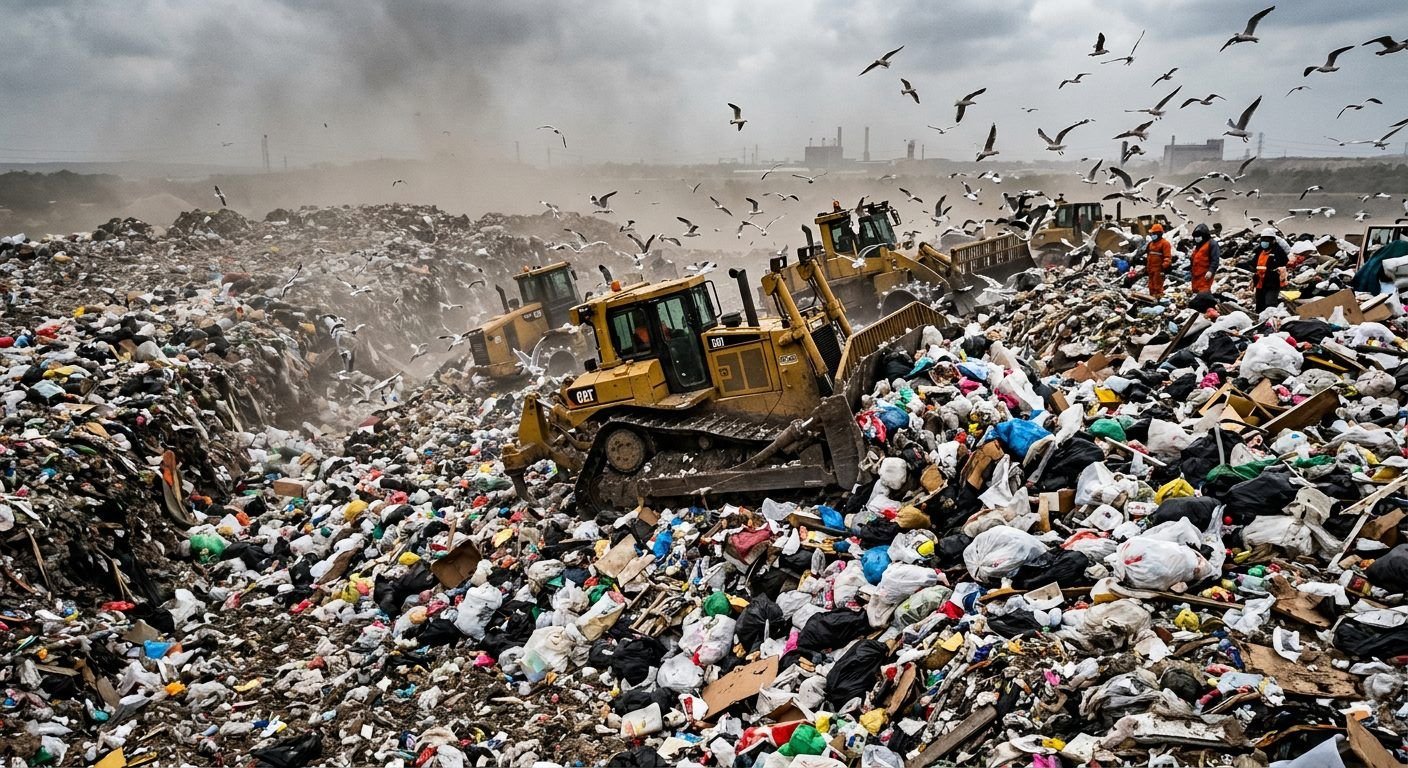
What to do with your town's trash.
Material by material: what to do, the official specs that allow it, and who already does it.
In 2018 the US landfilled about 146 million tons of municipal waste. Food was about 24% of it, plastics over 18%, paper about 12%, and rubber, leather and textiles over 11%. Source: U.S. EPA, National Overview.
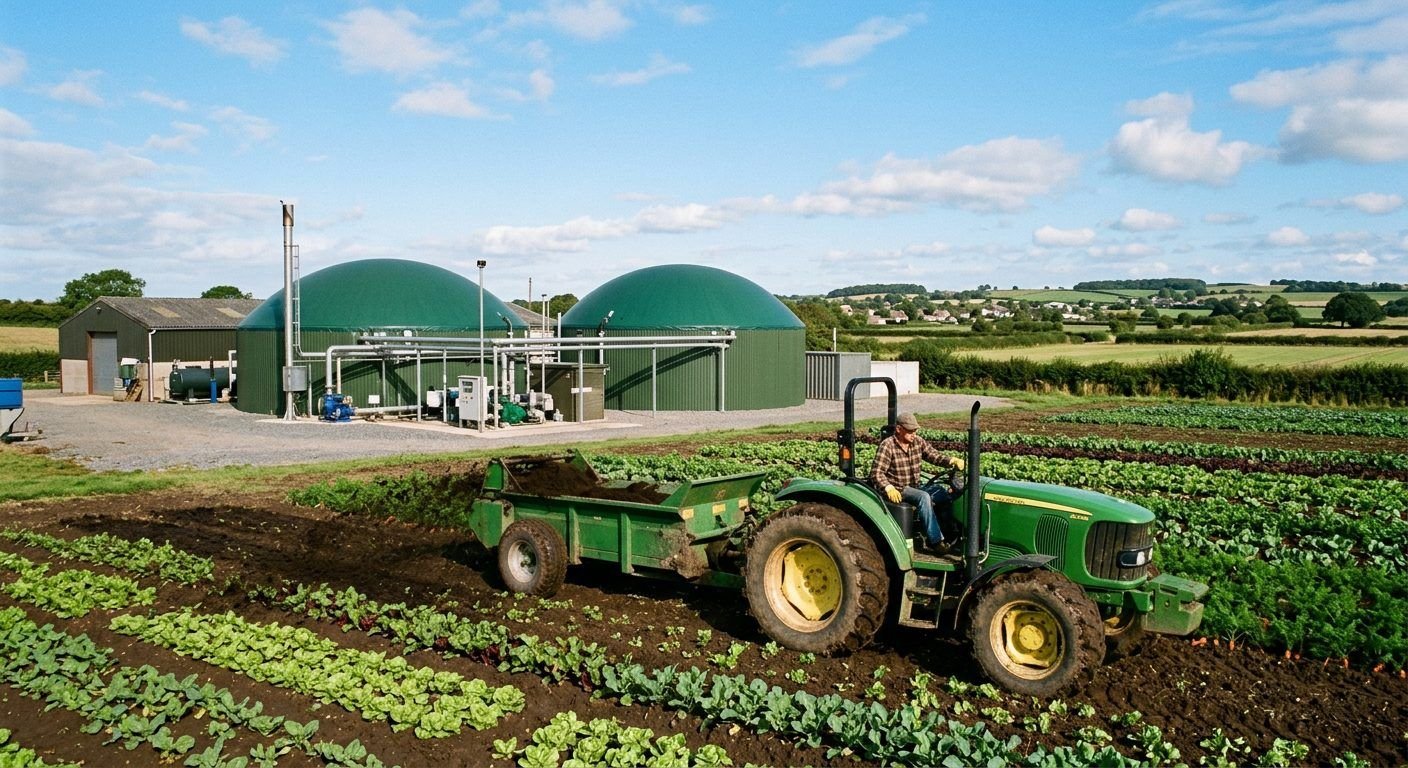
Food scraps & yard waste
Do this: Digest them for biogas and fertilizer, or compost them. Never bury them.
Official specs & guidance
- EPA: anaerobic digestion breaks down food waste, grease and wastewater solids without oxygen, making biogas (renewable energy) and digestate.Source: U.S. EPA, Anaerobic Digestion
- EPA: how-to guidance for home composting, community composting and starting a composting program.Source: U.S. EPA, Composting
- EPA: food was about 24% of US landfilled waste in 2018; only 2.6 million of 63.1 million tons of wasted food were composted.Source: U.S. EPA, National Overview (2018 data)
Where it's already done
- Oakland, California: EBMUD digests sewage with food scraps and grease. In 2012 it became the first wastewater plant in North America to make more renewable energy onsite than it uses.Source: EBMUD, Recycling water and energy
- San Francisco: its 2009 Mandatory Recycling and Composting Ordinance made it the first California city to require composting, including food scraps.Source: SF Environment Department
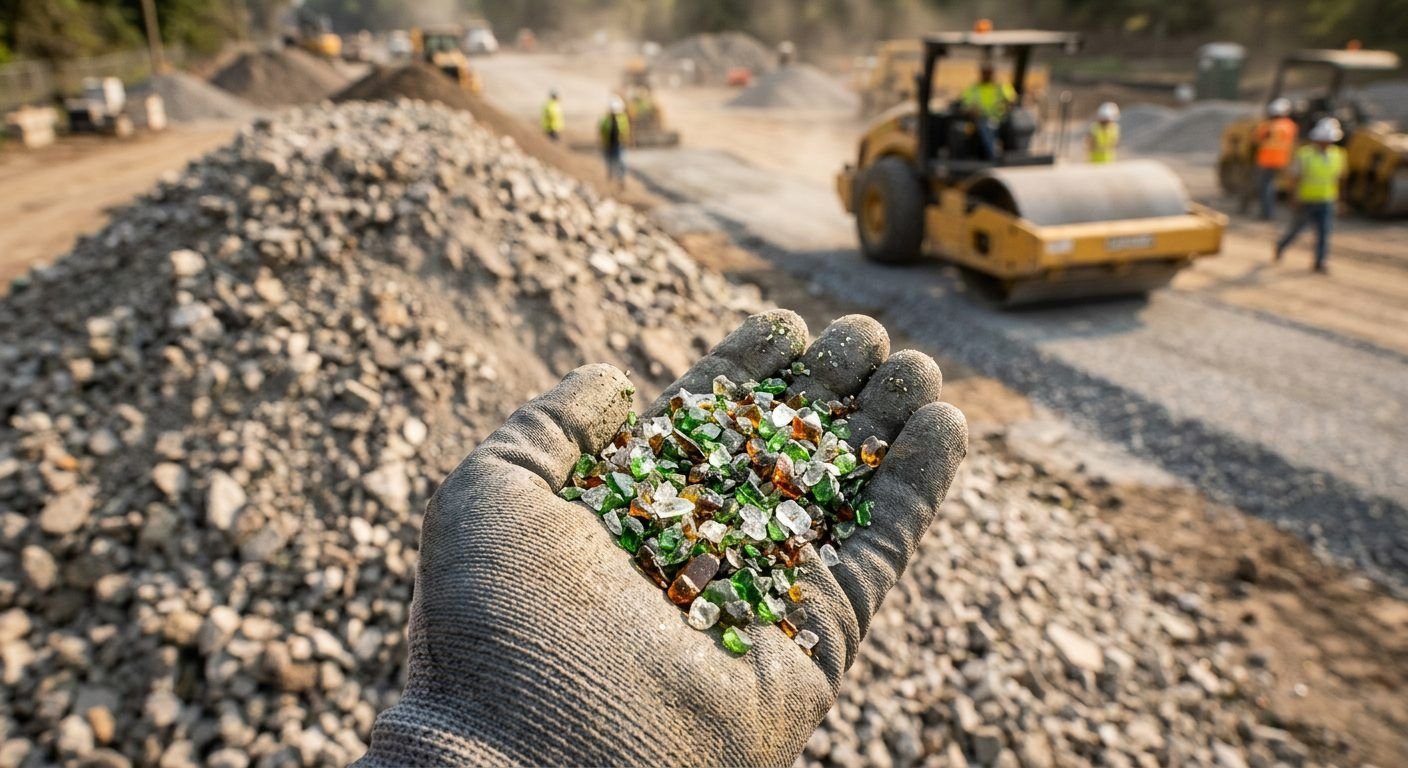
Glass
Do this: Crush glass that won't go back into bottles into cullet, and use it as sand-and-gravel aggregate for fill, drainage, pipe bedding and road base.
Official specs & guidance
- FHWA: properly sized crushed glass behaves like gravel or sand and should be suitable for road base or fill; it has also been used as an aggregate substitute in asphalt paving.Source: FHWA-RD-97-148, Waste Glass
- Texas DOT specs: up to 100% cullet for utility bedding and pipe underdrains; up to 20% in embankments and flexible base; up to 5% in asphalt-stabilized base.Source: TxDOT, Use of Glass Cullet in Roadway Construction
- New York State DOT (§733-05 Glass Backfill): up to 30% glass by weight in subbase, embankment and select fills, and as underdrain filter material.Source: NYSDOT, Recycled Materials (733-19)
Where it's already done
- Pennsylvania: PennDOT has used recycled glass for pipe bedding and trench backfill in place of virgin rock, reporting cost savings (still classed as trial uses).Source: PennDOT, Crushed Glass Fact Sheet (PDF)
- Texas: TxDOT specifications for glass cullet, developed with FHWA and the Texas Commission on Environmental Quality.Source: TxDOT, Use of Glass Cullet in Roadway Construction
Asphalt is the weakest use for glass: TxDOT calls it less attractive because of stripping in wet conditions, and PennDOT warns of performance problems in hot mix asphalt. Bedding, backfill and base are the proven routes.
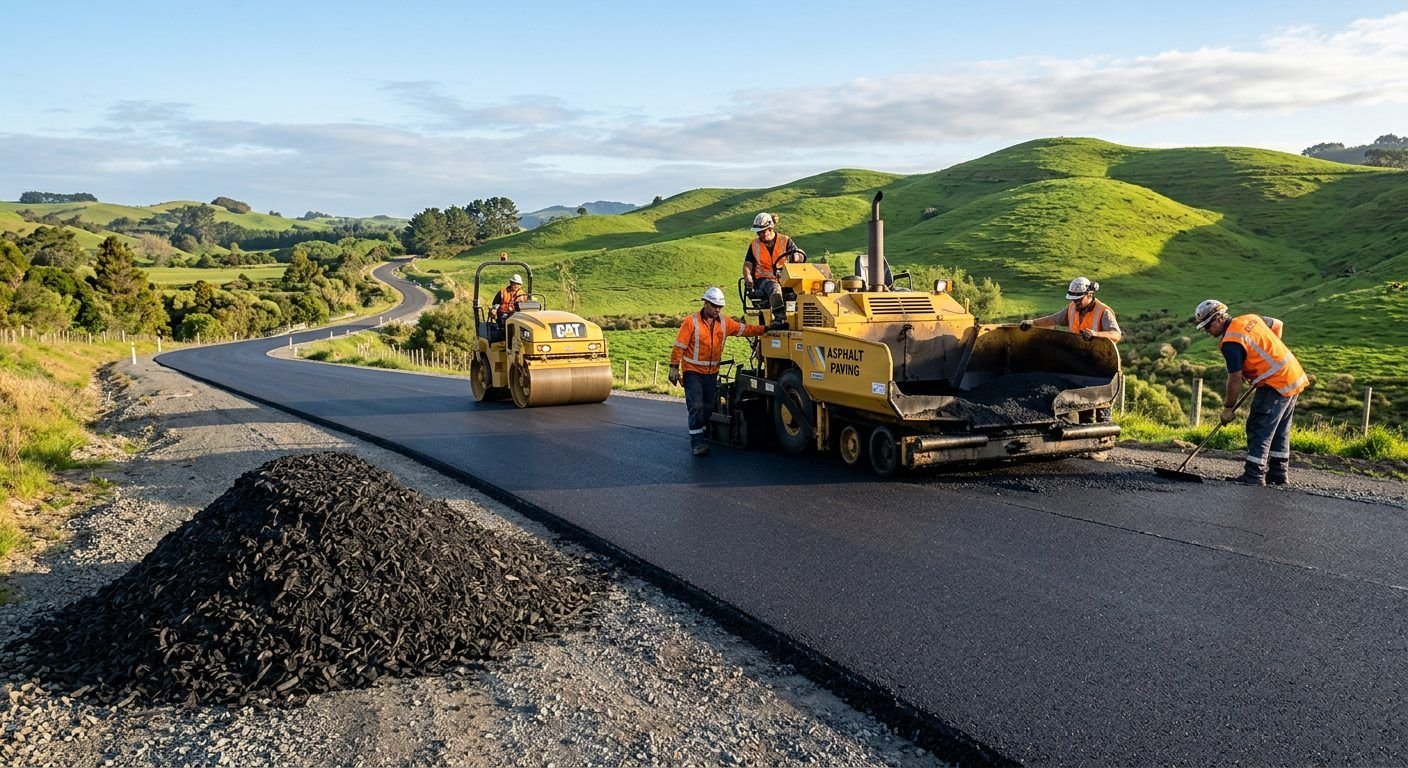
Tires
Do this: Grind scrap tires into crumb rubber and use it in rubberized asphalt or rubberized chip seal.
Official specs & guidance
- FHWA encourages waste tire rubber in asphalt paving where it is cost effective and properly engineered, and publishes technical guides for it.Source: FHWA, Ground Tire Rubber
- CalRecycle: rubberized asphalt concrete is specified in the Caltrans Standard Specifications and the Greenbook public works specs.Source: CalRecycle, Rubberized Asphalt Concrete
Where it's already done
- California: rubberized asphalt has been used since the 1970s, and CalRecycle grants help local governments pay for rubberized pavement projects.Source: CalRecycle, Rubberized Asphalt Concrete
Concrete & rubble
Do this: Crush and screen demolition concrete into recycled concrete aggregate (RCA) for road base, instead of quarrying new rock.
Official specs & guidance
- FHWA: concrete is routinely recycled into US highways, and its main use is as base material.Source: FHWA, Recycled Concrete Aggregate National Review
- New York State DOT: RCA may substitute for Type 1, 3 or 4 subbase when it meets the gradation, and may be used as embankment.Source: NYSDOT, Recycled Materials (733-19)
Where it's already done
- Minnesota, Utah, Virginia, Texas and Michigan: chosen by FHWA for in-depth review because of their experience recycling concrete as aggregate.Source: FHWA, Recycled Concrete Aggregate National Review
- San Francisco: a mixed construction-and-demolition recovery facility opened in 2003 at the city's transfer station.Source: SF Environment Department
Plastics
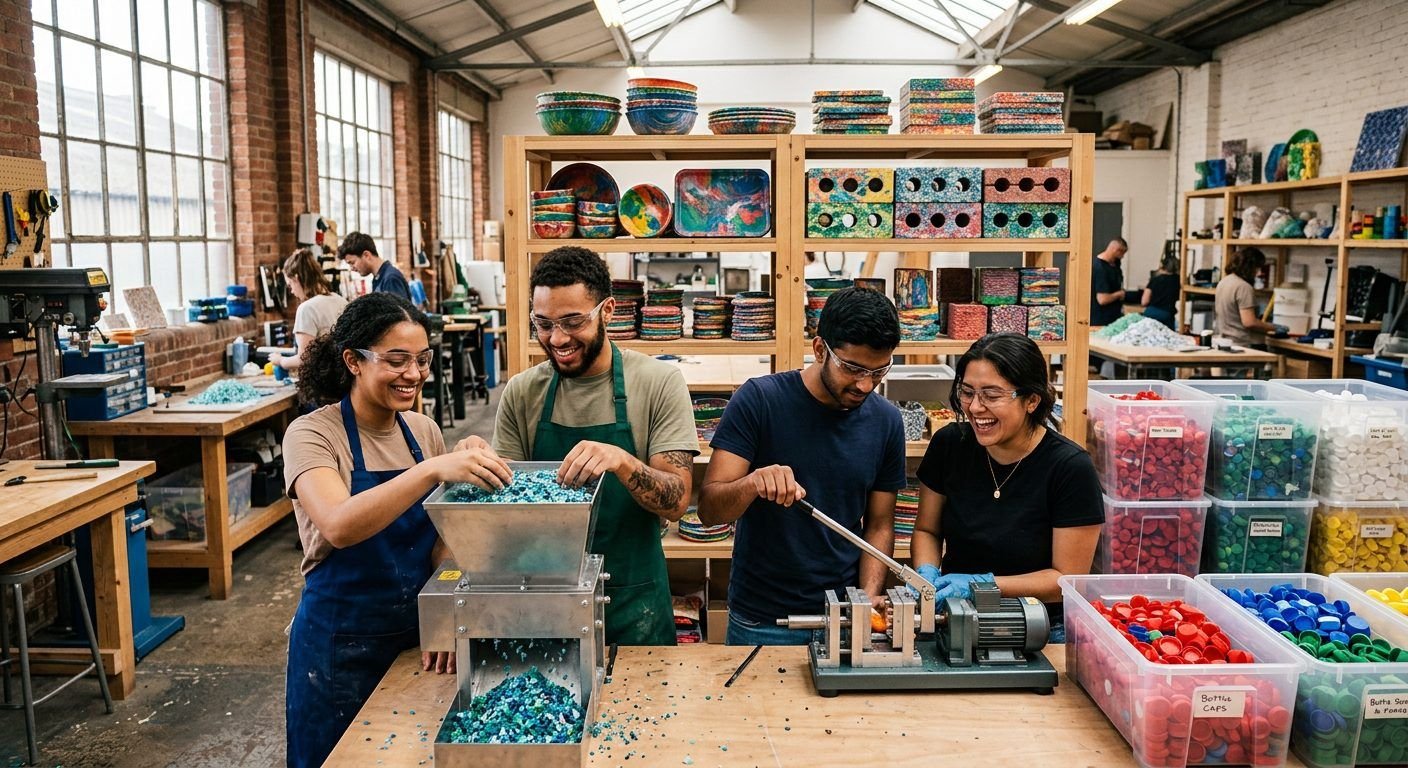
Do this: Open a small workshop with free, open-source Precious Plastic machines and turn local plastic into local products.
Official specs & guidance
- Precious Plastic: machine designs (shredder, sheetpress and more), blueprints and business plans are open source and free to download.Source: Precious Plastic
- EPA: plastics were over 18% of US landfilled waste in 2018, and only 9% of plastic was recycled.Source: U.S. EPA, National Overview (2018 data)
Where it's already done
- Worldwide: Precious Plastic reports about 1,100 workspaces in 56 countries (its 2024 impact data).Source: Precious Plastic
- The Philippines: Precious Plastic Philippines makes construction materials and has helped start more than 20 other workshops.Source: Precious Plastic
Paper, metals and e-waste
Paper & cardboard
Do this: Keep it clean and in recycling; shredded plain paper and cardboard can also go in compost as "browns".
- Paper was the largest part of US trash in 2018; 68.2% was recycled, and corrugated boxes 96.5%.Source: U.S. EPA, Paper and Paperboard data
- Shredded non-glossy paper and plain cardboard are compost "browns".Source: U.S. EPA, Composting
Metals
Do this: Collect cans and scrap metal for recycling; they never need to be buried.
- Only 50.4% of aluminum beer and soft drink cans were recycled in 2018; about 2.7 million tons of aluminum were landfilled.Source: U.S. EPA, Aluminum data
E-waste
Do this: Donate or use certified electronics recyclers; pull lithium-ion batteries out first.
- EPA: lithium-ion batteries and devices containing them should not go in household trash or recycling bins.Source: U.S. EPA, Electronics Donation and Recycling
Want help doing this in your town?
Educational guide, not engineering advice. Check your state's current specs before you build. Disclaimer
Get the next issue
Practical ways to keep waste out of the ground, in your inbox each week.
- Zero Waste Town Starter Kit FreeA five-step checklist to start diverting your town's waste.
- The Reuse ReportA weekly newsletter: one material, one fix, real sources.
- Reimagine Landfills Podcast First episode coming soonA weekly show on turning waste into work.
- Member perks Coming soonFree toolkits, early access, and a monthly live Q&A for members.